Cast iron
Scale, channeling, corrosion, fittings, and material transitions.
Open condition guideCamera-led sewer method planning
Technical guides and quote routing for pipe lining, pipe bursting, targeted repair, and older laterals across Amherst, New York.
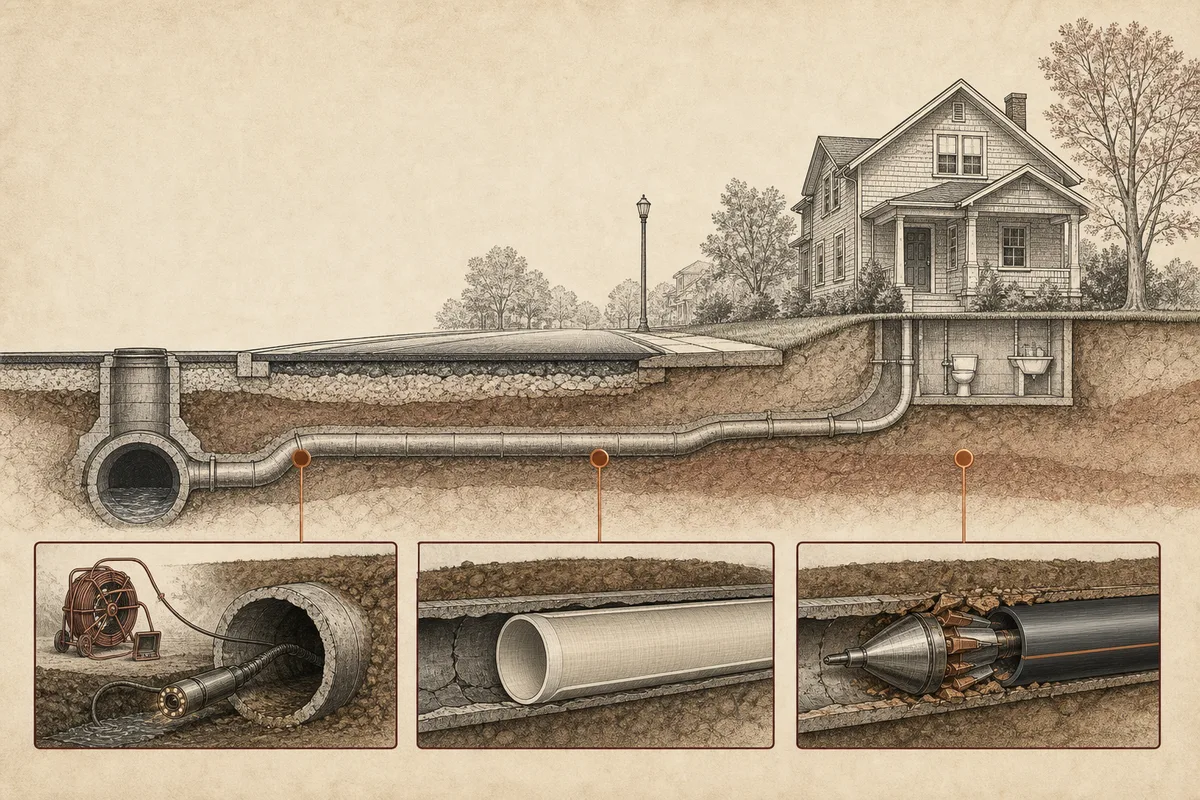
Map material, stations, defects, and limits.
Test each method against the same record.
Retain footage, scope, and inspection proof.
01 / material ledger
Age frames the inspection. Clean-pipe geometry and defect stations govern the next step.
Scale, channeling, corrosion, fittings, and material transitions.
Open condition guideShort sections create many joints where roots and infiltration can enter.
Review root entryFiber pipe can blister or flatten until a liner path is no longer reliable.
Review replacement pathsNewer material can still show failed fittings, poor bedding, or grade defects.
Review targeted repair02 / commercial field plan
Restaurants, multifamily buildings, offices, and managed sites need flow control, access, tenant, and repair-window planning.
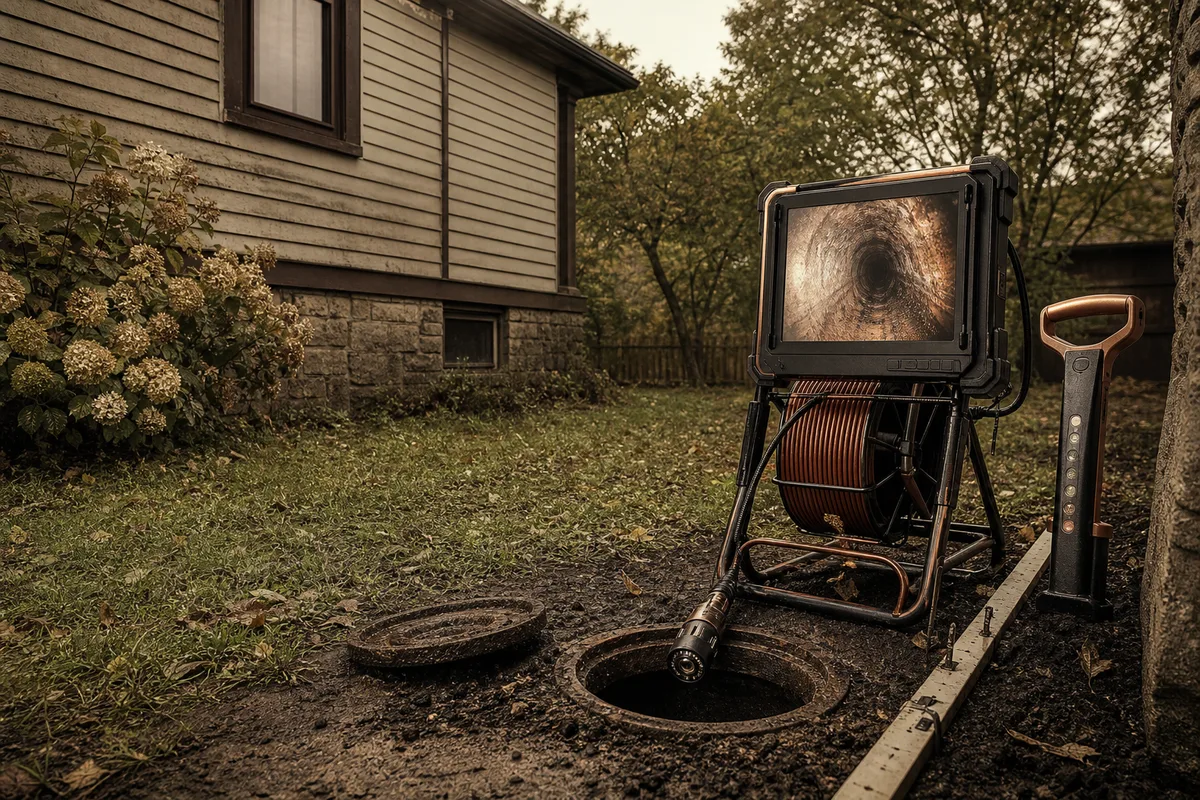
03 / diagnosis record
Name the access, direction, material, and diameter.
Tie roots, offsets, corrosion, and water to distance.
Record what the camera could not reach or reveal.
Connect the buried finding to an actual work zone.
04 / duration
05 / comparison table
These are research bands, not quotes. Length, depth, access, preparation, permits, groundwater, and restoration control the property-specific scope.
Read the full cost guide06 / process record
Public sewer, district connection, or onsite piping.
Locate access, joints, defects, and survey limits.
Rule each path in or out against the evidence.
Keep footage, scope, materials, permits, and signoff.
07 / service ring
08 / residential paths
Four common research paths connect the pipe record to rehabilitation, replacement, material, and purchase questions.
Evaluate a prepared host pipe for structural lining.
Open field guide R2Evaluate replacement where rehabilitation is not defensible.
Open field guide R3Expose scale, channeling, wall loss, and fittings before selection.
Open field guide R4Preserve the municipal and private inspection record before closing.
Open field guide09 / owner questions
Every property still needs inspection by a qualified local provider.
A measured camera inspection should document material, diameter, access, defect stations, alignment, deformation, and every limit of the survey. Those findings determine whether cleaning, a spot repair, lining, bursting, or excavation remains viable.
No. CIPP needs a host pipe that can be cleaned and still has a usable path. A collapse, severe deformation, failed fitting, or grade problem can require another repair or replacement path.
The Town of Amherst publishes an I&I inspection process for covered residential structures built before 1965 in the designated district before title transfer. Confirm the current property coverage and forms directly with the town.
No. Sewer service varies by municipality, district, and address, especially toward Clarence and other mixed utility areas. Confirm the serving system before scoping a private line.
Keep the complete pre-work and post-work footage, defect stations, written scope, material or product details, permit and inspection records, and restoration terms.
Create a property field note
Include the town, property type, system type if known, camera findings, and any access concerns.
716-274-7351